Ø Turbojet

§ The turbojet engine consists of four sections: compressor, combustion chamber, turbine section, and exhaust. The compressor section passes inlet air at a high rate of speed to the combustion chamber
§ The combustion chamber contains the fuel inlet and igniter for combustion
§ The expanding air drives a turbine, which is connected by a shaft to the compressor, sustaining engine operation
§ The accelerated exhaust gases from the engine provide thrust
§ This is a basic application of compressing air, igniting the fuel-air mixture, producing power to self-sustain the engine operation, and exhaust for propulsion
§ Turbojet engines are limited in range and endurance
§ They are also slow to respond to throttle applications at slow compressor speeds
Ø Turboprop
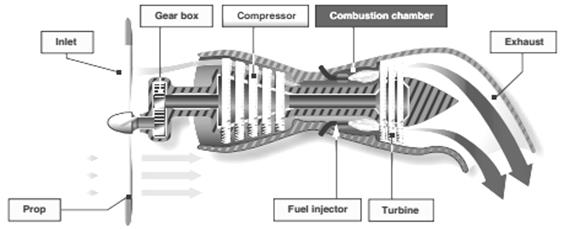
§ A turboprop engine is a turbine engine that drives a propeller through a reduction gear.
§ The exhaust gases drive a power turbine connected by a shaft that drives the reduction gear assembly
§ Reduction gearing is necessary in turboprop engines because optimum propeller performance is achieved at much slower speeds than the engine' operating rpm
§ Turboprop engines are a compromise between turbojet engines and reciprocating power plants
§ Turboprop engines are most efficient at speeds between 250 and 400 mph and altitudes between 18,000 and 30,000'
§ They also perform well at the slow airspeeds required for takeoff and landing, and are fuel efficient
§ The minimum specific fuel consumption of the turboprop engine is normally available in the altitude range of 25,000' to the tropopause.
Ø Turbofan

§ Turbofans were developed to combine some of the best features of the turbojet and the turboprop.
§ Turbofan engines are designed to create additional thrust by diverting a secondary airflow around the combustion chamber.
§ The turbofan bypass air generates increased thrust, cools the engine, and aids in exhaust noise suppression.
§ This provides turbojet-type cruise speed and lower fuel consumption.
§ The inlet air that passes through a turbofan engine is usually divided into two separate streams of air.
§ One stream passes through the engine core, while a second stream bypasses the engine core.
§ It is this bypass stream of air that is responsible for the term "bypass engine".
§ A turbofan's bypass ratio refers to the ratio of the mass airflow that passes through the fan divided by the mass airflow that passes through the engine core.
Ø Turboshaft

§ The fourth common type of jet engine is the turboshaft
§ It delivers power to a shaft that drives something other than a propeller
§ The biggest difference between a turbojet and turboshaft engine is that on a turboshaft engine, most of the energy produced by the expanding gases is used to drive a turbine rather than produce thrust
§ Many helicopters use a turboshaft gas turbine engine
§ In addition, turboshaft engines are widely used as auxiliary power units on large aircraft
Unit IV

 2017-09-29
 418
418