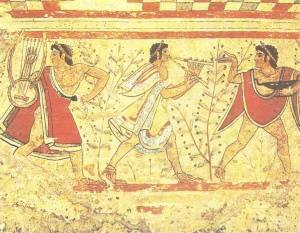
Археология об основании Рима: Новые раскопки проясняют и такой острый дискуссионный вопрос, как дата самого возникновения Рима...
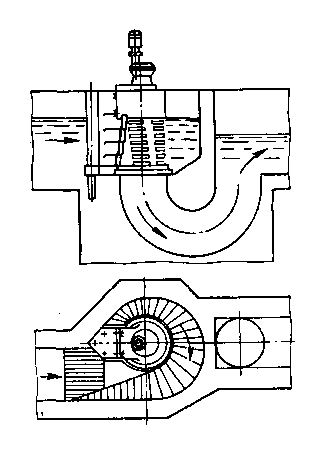
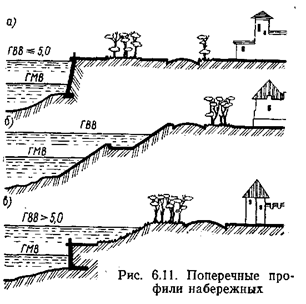
Поперечные профили набережных и береговой полосы: На городских территориях берегоукрепление проектируют с учетом технических и экономических требований, но особое значение придают эстетическим...
There is a great number of medical schools in Russia. Applicants have to pass 3 entrance exams: chemistry, biology and Russian language.
2023-01-01
71
There is a great number of medical schools in Russia. Applicants have to pass 3 entrance exams: chemistry, biology and Russian language.0.00 из
5.000 оценок
There is a great number of medical schools in Russia. Applicants have to pass 3 entrance exams: chemistry, biology and Russian language.
Academic year begins on September 1st and is divided into two term of 4 month each.
Medical education takes 6 years in Russia. The first two years are pre-clinical – students study anatomy, physiology, physics, histology and also philosophy.
The third year is a transitional year between the pre-clinical and clinical years. Students learn pathology, pharmacology, general surgery and general medicine.
The fourth and the fifth years are clinical. After a fourth year students have a practical course lasting 8 weeks. They work as doctors’ assistants at the therapeutical, surgical, obstetric and gynecological and other departments. After the fifth year they take a six-week course in out-patients’ clinics.
In the sixth year students work on chosen specialization.
Upon completion of the sixth year, having passed state exams, graduates get a diploma. After one year internship they receive a certificate of specialization.
Saratov State Medical University was founded in 1909. The founder and the first rector was professor V. Razumovsky.
At that time it was organized as the only faculty of the University that was the 10th in Russia.
In 1909, 93 students were admitted the university. Several Departments in the basic sciences were opened.Then in 1911 a new group of Departments started to function.
In 1930 the university was reorganized. An independent medical institute was formed. There were 3 faculties at the institute: Medical, Sanitary-Prophylactic and Care of Mother and Child.
By 1935 Saratov Medical Institute had about 1600 students.
So, at the beginning of 90-s Saratov Medical Institute had the, following faculties – Faculty of Medicine, Faculty of Pediatrics, Faculty of Dentistry, Faculty of postgraduate education and that of training military doctors.
In 1993 the Institute was again renamed and got the original name of the University. Saratov Medical University opened a new faculty – Faculty of Medicine #2, It trains specialists in health insurance and management in medicine.
World-wide, 2 major systems exist for the education of physicians: The American system, followed in the USA and Canada, and the European system, which has been adopted by the rest of the world.
The American system has 4 stages a general education: undergraduate medicine education and postgraduate education.
In the European system the students proceeds from secondary school directly to medical school.
As a result, undergraduate medical education typically occupies six rather four years.
Two kinds of medical establishment train doctors in Great Britain: medical faculties of the university and Higher medical school.
To enter medical higher school applicants take 5-6 entrance exams in English, in foreign language, in Mathematics, in Chemistry and Physics.
The course of study last for 8 years. Each school has its own curriculum which includes compulsory and non-compulsory subjects.
A 5-year curriculum consist of four periods: premedical, preclinical, introductory clinical and clinical.
After graduation from a higher school young specialists must take a one year intership before they begin to work as doctors.
WHO is a specialized agency of the United Nations with primary responsibility for international health matters and public health. It was founded on April the 7th, 1948. For the first time in the history it was truly global organization to protect and promote human health.
WHO activities take many forms:
- health education related to global health problems and environmental health;
- controlling and eradicating epidemic diseases; epidemic warnings;
- protecting mother and child health;
- improving sanitation and water supply;
- promotion of proper nutrition;
- immunization programs against the main infectious diseases;
- provision of essential drugs and vaccines.
The main concepts of WHO global health development are the concept of Primary Health Care (defined in 1978) and Health for All (declared in 1977).
It is difficult to achieve positive results in improving health levels unless there are close contacts between the countries. Thus international cooperation in medicine comprises many countries and organizations. There are three types of such cooperation: bilateral, multilateral and unilateral.
Medicine is among the most ancient of human occupations. There are 3 main stages in medicine development: Medicine of Ancient civilizations, Medicine of Middle Ages and Modern Medicine.
Early man, like the animals, was subject to illness and death. The medicine-man practiced magic to help people. New civilizations, which developed from early tribes, began to study the human body, its anatomic composition.
During the 18th century new discoveries were made in chemistry, anatomy, biology, other sciences. The advances of that time were invention of the stethoscope(by Rene Laennec), vaccination for the smallpox, discovery of anaesthetics and development of immunology and scientific surgery.
Medicine in the 20th century made enormous contributions in the basic medical sciences. These are discovery of blood groups and vitamins, invention of insulin and penicillin, practice of plastic surgery and transplantation.
There is a great number of medical schools in Russia. Applicants have to pass 3 entrance exams: chemistry, biology and Russian language.
Academic year begins on September 1st and is divided into two term of 4 month each.
 2023-01-01
 71
71