
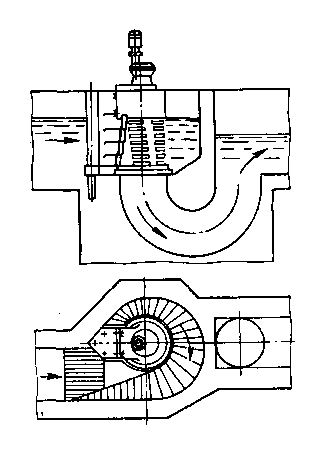
Состав сооружений: решетки и песколовки: Решетки – это первое устройство в схеме очистных сооружений. Они представляют...
История создания датчика движения: Первый прибор для обнаружения движения был изобретен немецким физиком Генрихом Герцем...
Состав сооружений: решетки и песколовки: Решетки – это первое устройство в схеме очистных сооружений. Они представляют...
История создания датчика движения: Первый прибор для обнаружения движения был изобретен немецким физиком Генрихом Герцем...
Топ:
Эволюция кровеносной системы позвоночных животных: Биологическая эволюция – необратимый процесс исторического развития живой природы...
Когда производится ограждение поезда, остановившегося на перегоне: Во всех случаях немедленно должно быть ограждено место препятствия для движения поездов на смежном пути двухпутного...
Генеалогическое древо Султанов Османской империи: Османские правители, вначале, будучи еще бейлербеями Анатолии, женились на дочерях византийских императоров...
Интересное:
Уполаживание и террасирование склонов: Если глубина оврага более 5 м необходимо устройство берм. Варианты использования оврагов для градостроительных целей...
Финансовый рынок и его значение в управлении денежными потоками на современном этапе: любому предприятию для расширения производства и увеличения прибыли нужны...
Как мы говорим и как мы слушаем: общение можно сравнить с огромным зонтиком, под которым скрыто все...
Дисциплины:
 2021-06-02 2021-06-02 |
 70 70 |

из
5.00
|
Заказать работу |
Содержание книги
Поиск на нашем сайте
|
|
|
|
«ROCK CYCLE»
Weathering – the process by which Earth materials change when exposed to
conditions at or near the Earth's surface and different from the ones under
which they formed.
Weathered rocks –rocks that have undergone weathering.
Erosion – the set of all process by which particles of rock and soil are
loosened and moved.
Transportation- the movement of a particle from one location on the Earth’s
surface to another.
Mobile sediments – rock material, which can be moved by water, wind or
gravity.
Deposition – physical settling of mineral and other material from water, air,
or ice, or chemical or biological precipitation of minerals from water.
Sedimentary sequences – sediments laid down (ex. by slowing water
currents, slowing wind currents, melting ice)
Compaction – reduction of pore space between individual particles as the
result of overlying sediments or of tectonic movements.
Cementation – the process by which clastic sediments are converted into
sedimentary rock by precipitation of mineral cement between the sediment
grains, forming an integral part of the rock.
Sedimentary rocks – rocks formed by the consolidation of sediment settled
out of water, ice or air and accumulated on the Earth’s surface.
Metamorphism – the processes, which produce structural and mineralogical
changes in any type of rock in response to physical and chemical conditions
(differing from those under which the rocks originally formed). Regional
metamorphism – heat and pressure; thermal metamorphism – heat from an
intrusion.
Metamorphic rocks – rocks formed by change in heat and pressure without
melting.
Extrusive (effusive) rocks – rocks crystallized from lava (fast cooling) or
blasted from a volcano.
Melting – solid rocks becoming liquid.
Magma – molten rock that forms naturally within the Earth; comes from
partial melting of the mantle below the crust.
Extrusion – erupting magma at the surface through the volcanoes as lava,
ash and blocks (lava eruption, explosive eruption).
Intrusion – forcing of magma into other rocks and solidifying.
Intrusive rocks – rocks crystallized from magma underground.

Fig.12 Rock cycle
Read the following text and fulfill the after task exercises
THE ROCK CYCLE
Different paths and successions characterize the crustal histories of Earth materials from different geologic environments. The cycle has been repeated in variable sequence, depending on local geologic circumstances, since formation of the planet. So, what is a rock cycle?
The rock cycle is the extensive reworking of Earth’s materials. The rock cycle relates the history of formation of various units to one another, to their immediate and ultimate sources and to the continuing compositional differentiation and growth of the crust. This chemical differentiation involves crystal-melt fractionation (including partial fusion) of the uppermost mantle and lowermost crust, weathering, differential solution, mechanical and chemical transport, sedimentation and metamorphic fluid-rock chemical exchange. The following steps in the rock cycle:
1. igneous rocks crystallize at considerable depths or on the surface
2. many are eventually uplifted, weathered and eroded
3. the products of erosion are bodily transported
4. after mixing with contrasting materials, deposited as sediments
5. then lithified during and after burial
6. may be metamorphosed or even partially remelted near the base of the continental crust (the products of these changes are metamorphic and secondary plutonic igneous rocks)
Both sedimentary and metamorphic rocks are derived ultimately from igneous parents – the primary sources of crustal crust. Both sedimentary and metamorphic rocks may be subjected to the changes described above:
1. erosion and deposition as new sediments
2. granulation and recrystallization to produce metamorphic rocks
3. partial fusion giving rise to igneous rocks and residual, refractory to metamorphic.
This complex sequence of lithologic addition and reworking is repeated over and over in different orders as dictated by geologic circumstances. The process results in the increasing heterogeneity and compositional differentiation of the crust, as well as in the gradual increase in the total volume of continental mass. The entire cycle is intimately related to the deformational process. The rocks and minerals that constitute the dynamic Earth are constantly involved in the processes of breakdown and formation anew.
(Robert Lauterbach “The World of Geology -The Earth then and now” 1983 Leipzig)
VOCABULARY
path – путь
succession – последовательность (напластования)
sequence – последовательность
variable –изменчивый; непостоянный
reworking –переработка
differentiation – дифференциация; разделение
fractionation – разделение на фракции
fusion – плавление
sedimentation – осадконакопление, седиментация
fluid – флюид
exchange – обмен
crystallize (recrystallization) – кристаллизоваться (перекристаллизация)
uplift – подъем, поднятие
erode (erosion) – эродировать, разрушать (эрозия)
deposit (deposition) – отлагаться (отложение)
lithify (lithification) – литифицировать (литификация)
metamorphose (metamorphism) – изменять; превращать (метаморфизм)
remelt (remelting) – переплавлять (переплавление)
granulation – грануляция
residual – остаточный
refractory – тугоплавкий
heterogeneity – гетерогенность; неоднородность
breakdown – разрушение, распад
deform (deformation) – деформировать (деформация)
EXERCISES
|
|
|
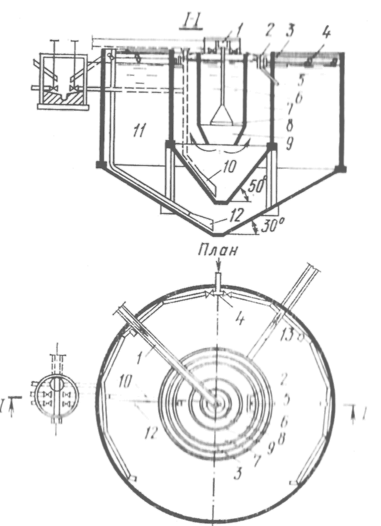
Типы сооружений для обработки осадков: Септиками называются сооружения, в которых одновременно происходят осветление сточной жидкости...

Историки об Елизавете Петровне: Елизавета попала между двумя встречными культурными течениями, воспитывалась среди новых европейских веяний и преданий...
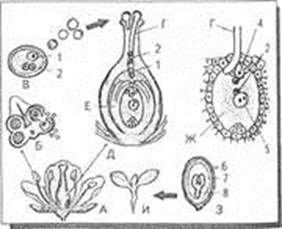
Двойное оплодотворение у цветковых растений: Оплодотворение - это процесс слияния мужской и женской половых клеток с образованием зиготы...
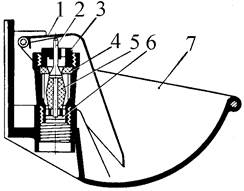
Индивидуальные и групповые автопоилки: для животных. Схемы и конструкции...
© cyberpediasu.com 2017-2026 - Не является автором материалов. Исключительное право сохранено за автором текста.
Если вы не хотите, чтобы данный материал был у нас на сайте, перейдите по ссылке: Нарушение авторских прав. Мы поможем в написании вашей работы!

