1 Superconductivity is a phenomenon of exactly zero electrical resistance and expulsion of magnetic fields occurring in certain materials when cooled below a characteristic critical temperature.
2 The occurrence of the Meissner effect indicates that superconductivity cannot be understood simply as the idealization of perfect conductivity in classical physics.
3 In a superconductor, the resistance drops gradually to zero when the material is cooled below its critical temperature.
4 In 1986 it was discovered that some ceramic materials have a critical temperature above 90 K
5 In ordinary conductors, such as copper and silver, the decrease of temperature is limited by impurities and other defects
6 A superconductor is generally considered high temperature if it reaches a superconducting state when cooled using liquid nitrogen or low temperature if more aggressive cooling techniques are required to reach its critical temperature.
7 Liquid nitrogen boils at 77 K, and superconductivity at higher temperatures than this facilitates many experiments and applications that are less practical at lower temperatures.
8 The electrical resistance of a metallic conductor decreases gradually as temperature is lowered
Complete the table.
WORD EAMILY continue
Nouns________________ Verbs ________________
________________ _________________
Adjectives_____________ Adverbs ________________
______________ _________________
 Superconductivity: Discoveries & Discoverers
2
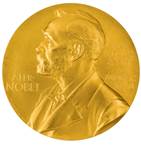
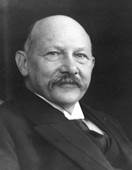
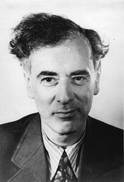
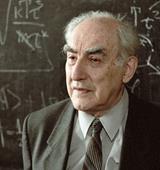
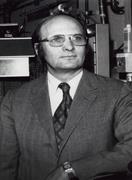
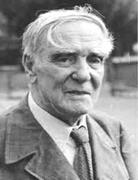
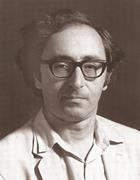
1 Look at the list of Nobel Laureates in Superconductivity and match them with the photos.
1________________ 2_____________________ 3___________________
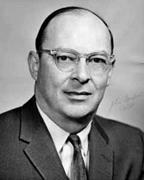
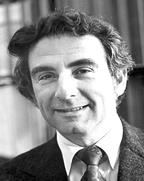
4____________________ 5______________________ 6__________________

7___________________ 8____________________ 9_____________________
1 Heike Kamerlingh Onnes 2 Pyotr L. Kapitsa 3 Lev Landau
4 Vitalij Ginzburg 5 Leon Cooper 6 John Schrieffer
7 John Bardeen 8 Brian David Josephson 9 Alexei Abrikosov
2. Work in pairs. Read the information. Ask and answer the questions about Nobel Laureates* in Superconductivity.
Example:
Student A: Do you remember when Onnes received the Nobel Prize in Physics?
Student B: I suppose it happened in 1913.
Student A; What did he get it for?
Student B: Well, I think for the discovery of superconductivity.
1 The era of low-temperature physics began in 1908 when the Dutch physicist Heike Kamerling Onnes first liquefied helium which boils at 4.2 K at standard pressure.1 In 1913 Heike Kamerling Onnes received the Nobel Prize in Physics for his investigations on the properties of matter at low temperatures, which led to the production of liquid helium and the discovery of superconductivity.
2 In 1972 John Bardeen, Leon Cooper and John Shrieffer received the Nobel Prize in Physics for the jointly developed theory of superconductivity. It is the first microscopic theory of superconductivity since the discovery in 1911. It came to be known as the BCS theory.
3 In 1932, the Royal Society Mond Laboratory* was created specially for Pyotr Kapitsa. By 1934 he had developed there “an ingenious device for liquefying helium in large quantities – a pre-requisite for the great progress in low-temperature physics.” In 1978 Pyotr Kapitsa received one half of the Nobel Prize in Physics “for his basic inventions and discoveries in the area of low temperature physics, which included the discovery of superfluidity in helium.”
4 In 1950 Landau and Ginzburg published a phenomenological theory for superconductivity, wherein the order parameter introduced by Landauto describe phase transitions is identified as a scalar wave function. According to this theory the properties of superconductors depend on a dimensionless material constant - now known as Ginzburg – Landau constant. In 1962 Lev Landau received the Nobel Prize in Physics “ for his pioneering theories for condensed matter, specially liquid helium.
5 You have to be brilliant to win a Nobel Prize in Physics. But imagine how amazingly brilliant you need to be to scoop two of these prizes. That was the achievement of American physicist JohnBardeen .. He won his first prize in 1956 (with Brattan and Shockley) for inventing the transistor.
But he won a second prize almost three decades later, in 1972 (with Cooper and Schrieffer), for developing the best theory we currently have of how superconductors work.
6 In 2003 AlexeiAbrikosov and Vitalij Ginzburg received the Nobel Prize in Physics “for pioneering contributions to the theory of superconductors and superfluids*.”
7 In 1973 Brian David Josephson received one half of the Nobel Prize in Physics “for his theoretical predictions of the properties of a supercurrent through a tunnel barrier, in particular those phenomena which are generally known as the Josephson effects.”
* Nobel Laureate [nəʊˈbel ˈlɒr.i.ət]
*Royal Society Mond Laboratory – Laboratory for Studying Liquid Hydrogen, Cambridge, England.
* superfluid [suːpəˈfluːɪd] – сверхтекучая жидкость
3* C hoose one scientist you like most and write several sentences about their discoveries and research work. Search the Internet if necessary.
4. Watch the video “What is a superconductor – Magic Marks ”.
Work inpairs and complete these dialogues.
Student A: What is meant by the critical current density when we speak about superconductors?
Student B: I suppose it is current density above which…
Student A: What does the critical current density depend on?
Student B; As far as I remember it depends on…
Student A; You know, some conditions can break the superconductivity of a material.
What are they?
Student B: They mentioned three conditions: a)… b)… c)…
Student A: Could you explain the term the critical temperature for a superconductor?
StudentB I think it is the temperature at which...
5. Complete each figure with the correct term.
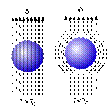
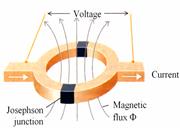
 Cooper pairs The Meissner effect The Josephson effect
Fig. 1 __________ Fig 2 ____________ Fig.3 __________

 2021-12-12
 74
74